Core Themes

Explore youth mental health questions about anxiety, identity, relationships, and meaning through concise, themed paths.

A neatly arranged writing desk featuring a sturdy leather‑bound journal opened to blank pages, a finely crafted brass hourglass slowly draining sand, and a small bonsai tree with carefully trained branches, representing patient growth in youth mental health. Outside the frame of the desk, a minimalist bookshelf holds indistinct, out‑of‑focus volumes of philosophy and psychology. Soft overcast daylight filters through sheer curtains, creating even, calming illumination and faint, elongated shadows. Photographic realism, shot from a slightly elevated angle using the rule of thirds, with the journal in sharp focus and the background gently blurred, projecting a mood of quiet introspection, professionalism, and hope.
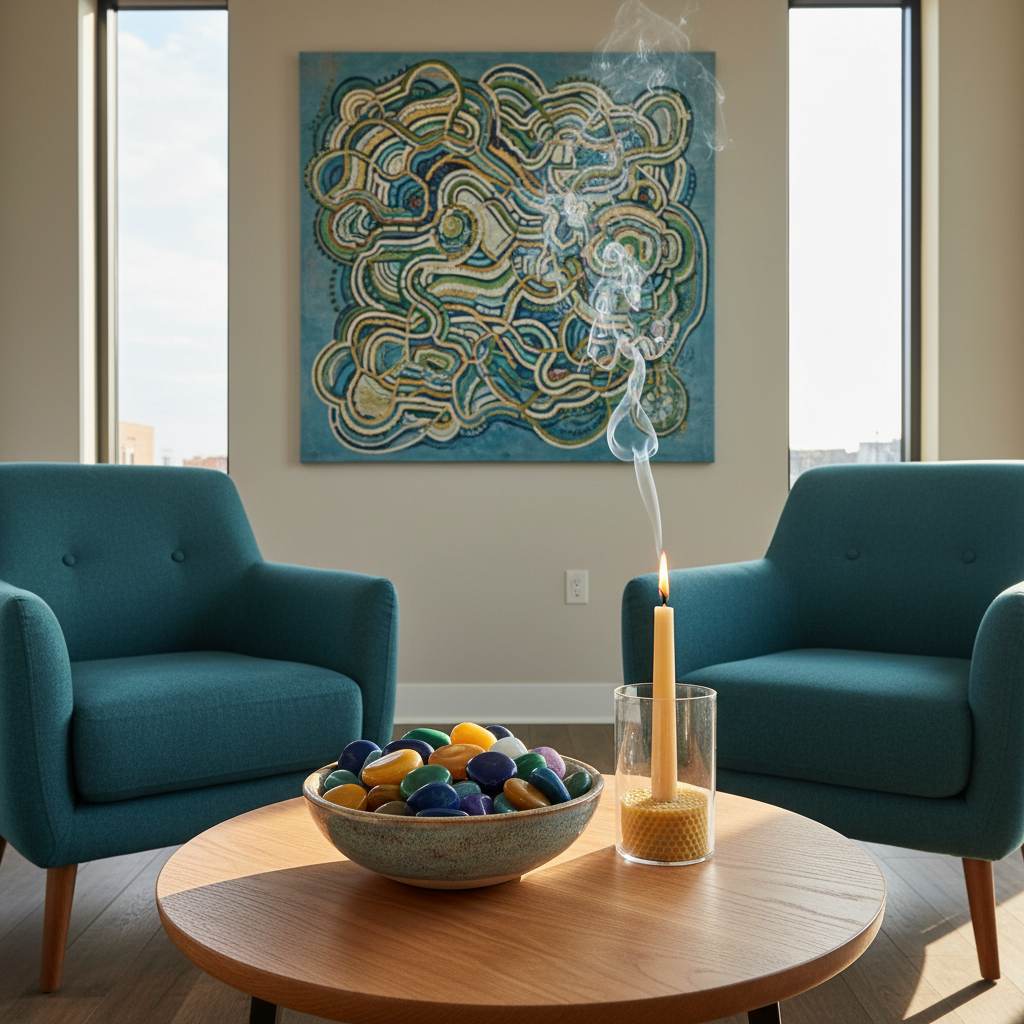
A modern therapy space without people: a deep teal armchair facing an empty matching chair across a low oak table, on which sits a ceramic bowl filled with smooth, colorful worry stones and a single lit beeswax candle in a safe glass holder. On the wall behind, an abstract artwork suggests a labyrinthine mind without using text or faces. Late afternoon golden light streams through tall windows, casting warm, elongated shadows and a gentle glow on the fabric textures. Photographic realism, eye‑level composition with balanced framing, evoking trust, safety, and authenticity in a youth‑focused mental health setting.

Approach

Each theme is chosen where research, youth clinical practice, and ancient traditions meet, offering grounded reflection tools, case-informed insight, and practical strategies you can carry directly into sessions, supervision, and program design.